DOLE, ILO, partners drive digital transformation of public employment services in Eastern Visayas
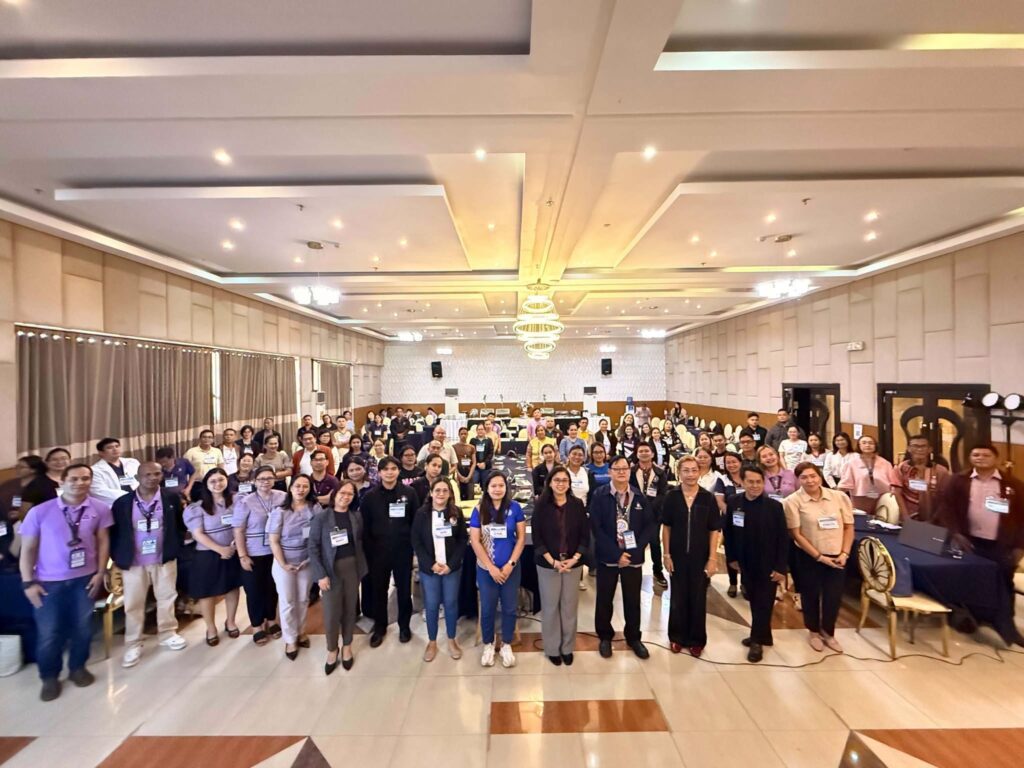
𝐓𝐀𝐂𝐋𝐎𝐁𝐀𝐍 𝐂𝐈𝐓𝐘 — In line with the commitment of the Department of Labor and Employment (DOLE), under the leadership of Secretary Francis N. Tolentino, to modernize the delivery of public employment services, the DOLE Regional Office VIII, in partnership with the International Labour Organization (ILO) Philippines and other government agencies, conducted the Capacity Building Training on the Digitalization of Labor Market Information (LMI) and Career Development Support Services on September 7–11, 2026 at Hotel De Fides, this city.
Joining the five-day training were 80 PESO Managers and Job Placement Officers from across Eastern Visayas, along with representatives from the Philippine Statistics Authority (PSA), Technical Education and Skills Development Authority (TESDA), Department of Migrant Workers (DMW), Department of Economy, Planning, and Development (DEPDev), Department of Information and Communications Technology (DICT), and Department of Education (DepEd), who supported the activity through their respective mandates and areas of expertise.
The activity forms part of the government’s continuing efforts, under the UN Joint Programme Digital PINAS, to modernize Labor Market Information (LMI) systems and mainstream digital technologies in public employment service delivery, consistent with the Philippine Labor and Employment Plan (LEP) 2023–2028 and DOLE’s Digital Transformation Roadmap.
During the training, participating resource persons and partner agencies delivered inputs within their respective areas of expertise, equipping PESO personnel with practical, low-cost, and simple digital tools—including Artificial Intelligence (AI) applications—for collecting, analyzing, and disseminating LMI, as well as for delivering career development support services to jobseekers and enterprises in their localities.
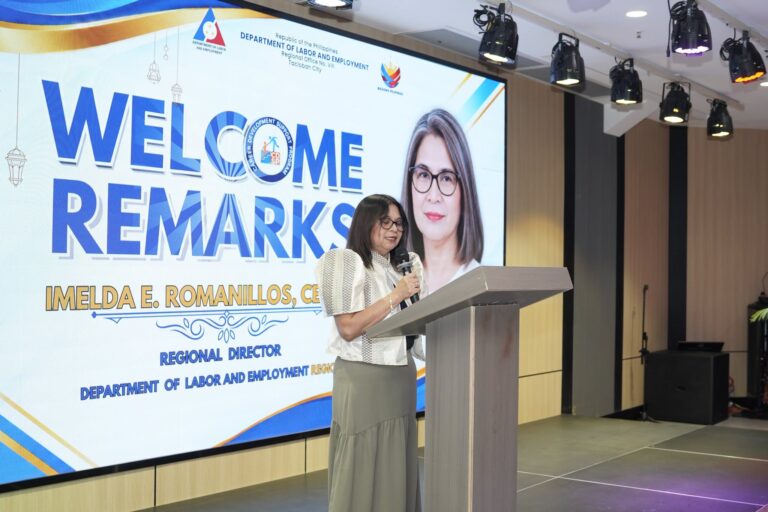
DOLE-RO8 OIC-Regional Director Atty. Joan Noya-Nidua emphasized the importance of equipping PESOs with the digital know-how needed to keep pace with the evolving labor market.
“Our PESOs are at the frontline of employment facilitation, and it is important that they are equipped not just with the right information, but with the right tools to reach jobseekers and employers more efficiently. This training is a step toward ensuring that our public employment services remain responsive, relevant, and accessible-even in far-flung areas,” Atty. Noya-Nidua said.
For his part, DOLE-RO8 OIC-Assistant Regional Director Engr. Martin Jequinto emphasized the value of collaboration among government agencies and development partners in building the digital capacity of frontline PESO personnel.
“This partnership with the ILO and our fellow agencies allows us to bring the best available knowledge and tools closer to our PESOs. Strengthening their capacity in digital LMI and career guidance services is a concrete step toward more efficient, inclusive, and future-ready employment facilitation across the region,” Engr. Jequinto said.
Serving as lead resource person was Ms. Katherine Brimon, Program Officer of ILO Philippines, who provided technical inputs throughout the training on digital tools and approaches for generating LMI and delivering career development support services. She was joined by resource persons and representatives from BLE, PSA, DepEd, and Advance Thinkers Co., who enriched the sessions with inputs on labor market forecasting, official labor statistics, career guidance and counseling, and the use of big data in labor market analysis.
The training is being conducted as a pilot initiative of the ILO, with a manual or toolkit on digital tools for LMI and career development support services to be developed based on its results. The toolkit will then be tested in one pilot PESO in the region from January to June 2027, ahead of wider dissemination and adoption across other PESOs nationwide.
This initiative aims to strengthen PESO capacity in producing up-to-date LMI reports, formulating localized action plans, and tapping partnerships that ensure connectivity in service delivery, particularly in remote and underserved areas.